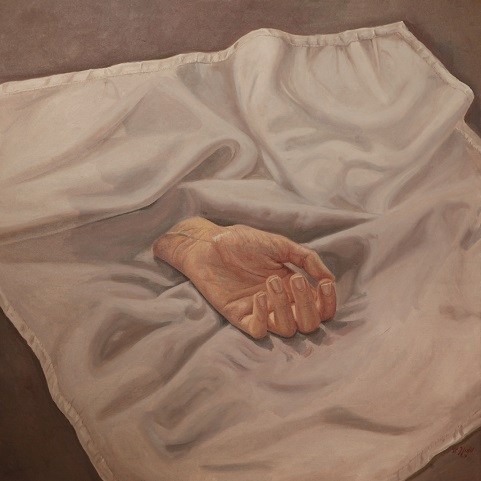
HAND-WRITING/WRITE-HANDING
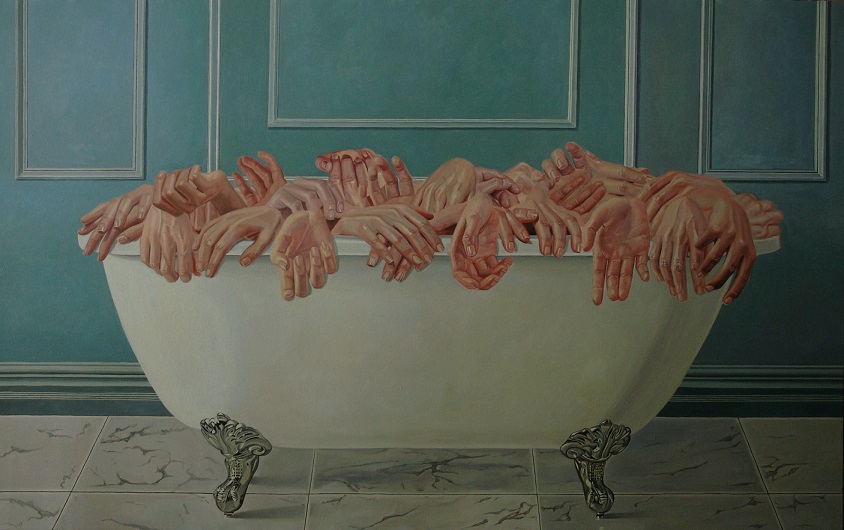
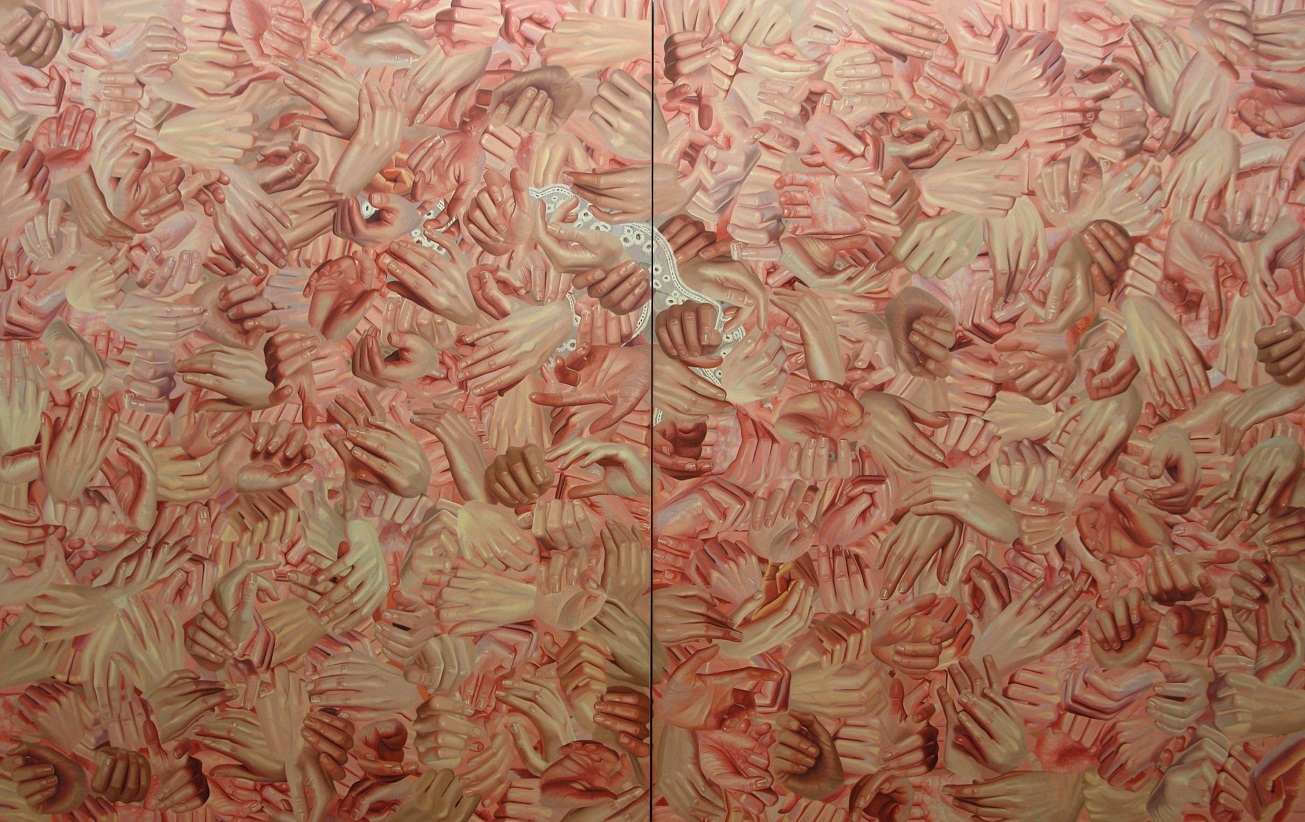
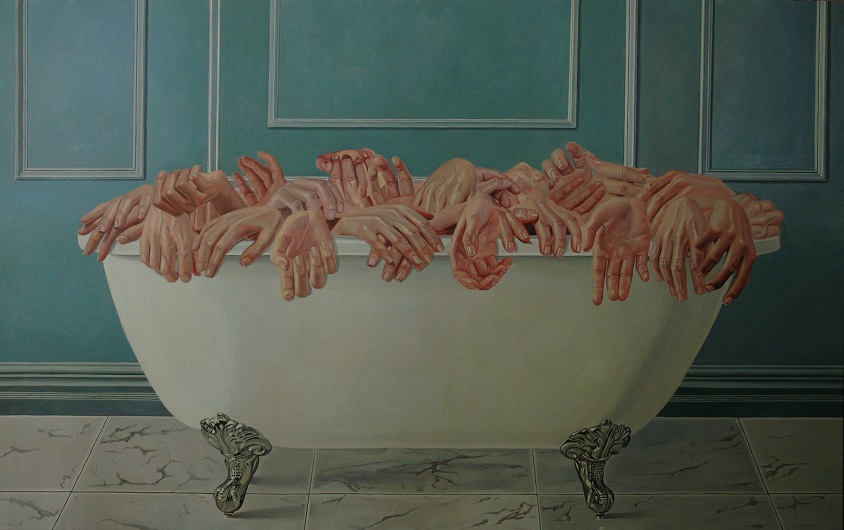
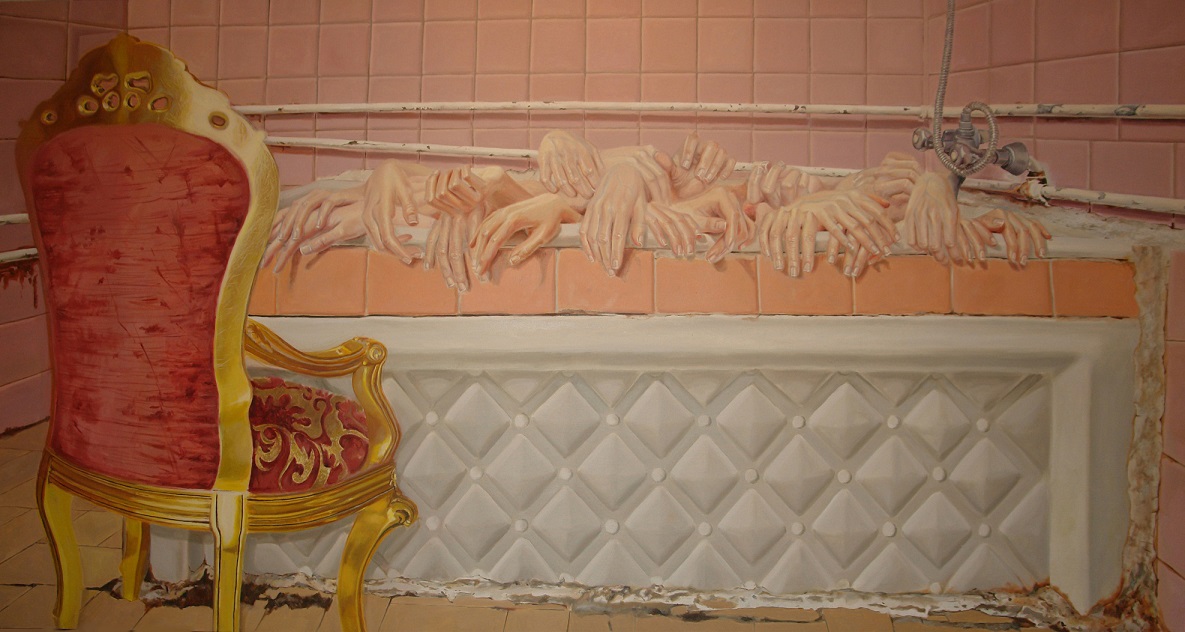
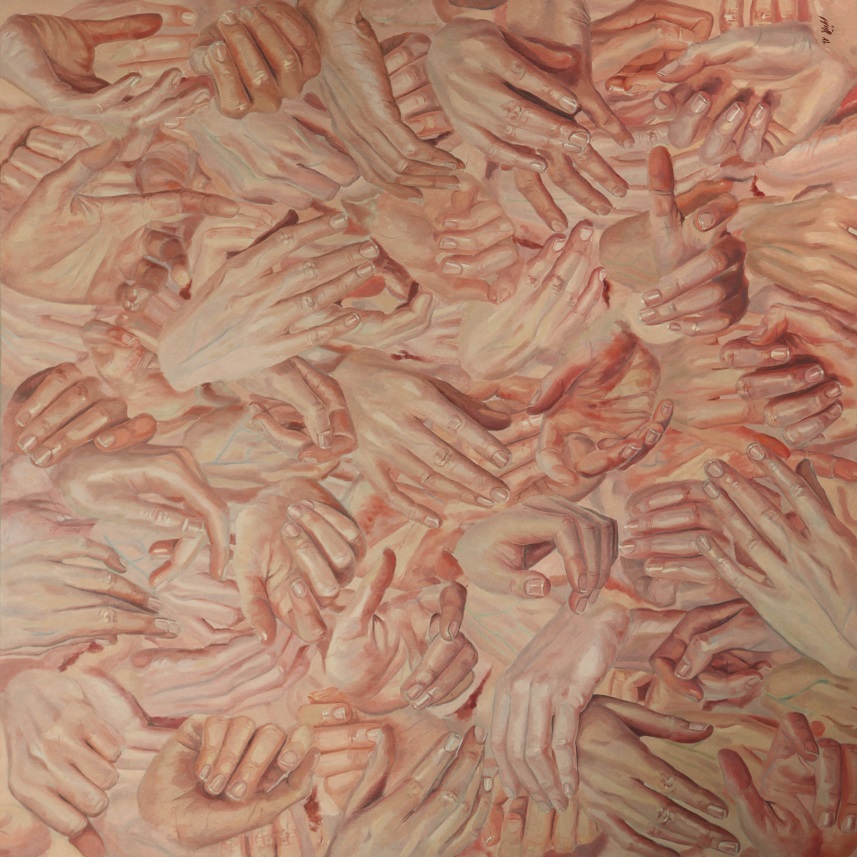
In her monumental diptych Epistle 1 ($190 \times 300\text{ cm}$, Oil on Canvas, 2015), Sepideh NoorManesh offers a visceral and haunting entry into her series “Hand Writing / Write Handing”. The work is not merely a depiction of hands, but a dense, suffocating environment—a seamless field of dismembered flesh that literalizes her poetic inquiry into time, memory, and survival.
Drawing directly from her statement—where hands exist as relics “deemed to the darkness of abysses”—Noormohammadmanesh constructs a composition void of central focus or negative space. Here, the “hand tool” and the “hand word” collide. The canvas presents a chaotic assemblage of twisted, intertwined hands: the hand that draws, the hand that kills, the hand that bears witness.
By severing the hand from the body, the artist introduces a profound tension between presence and loss. These “bodiless hands” and “faceless bodies” exist as remnants of a traumatic experience—surviving death yet frozen in a state of disintegration. They defy a single reading, drawing the viewer into a tight, claustrophobic loop where hands are continuously becoming rather than simply being. Epistle 1 functions as a dark cave wall, simultaneously hiding and revealing a secret sealed within time.
Artwork Details
Title: Epistle 1
Series: Hand Writing / Write Handing
Medium: Oil on Canvas
Dimensions: 190x300x5 cm
Year: 2015
Collection: Collection of DD Museum Gallery
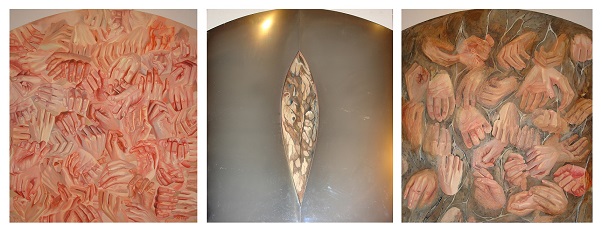
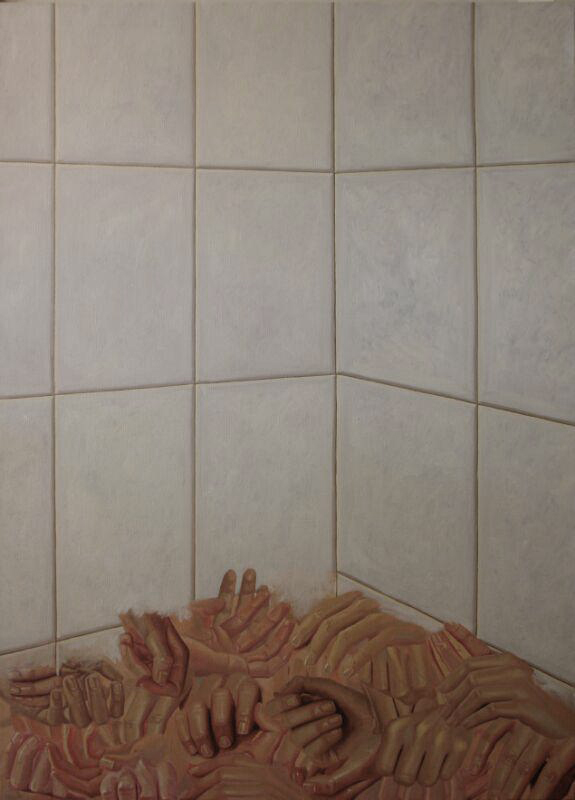
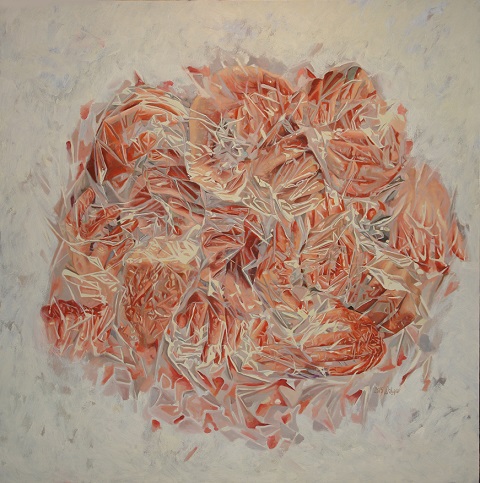
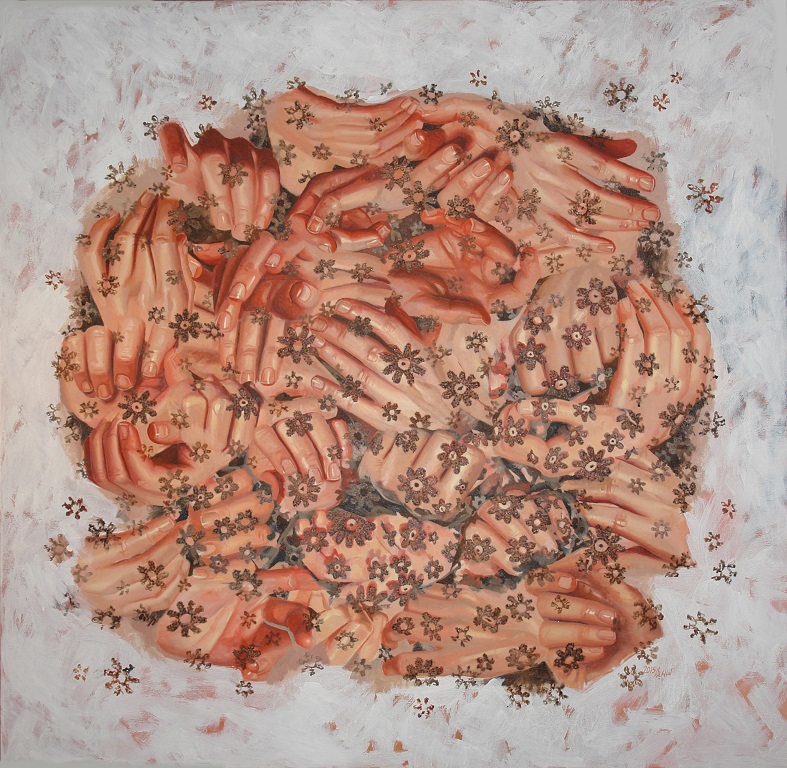
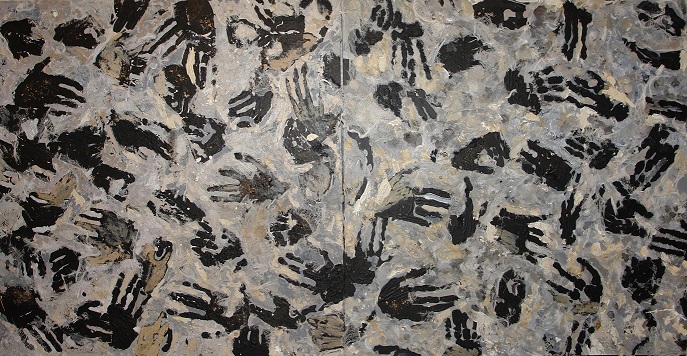
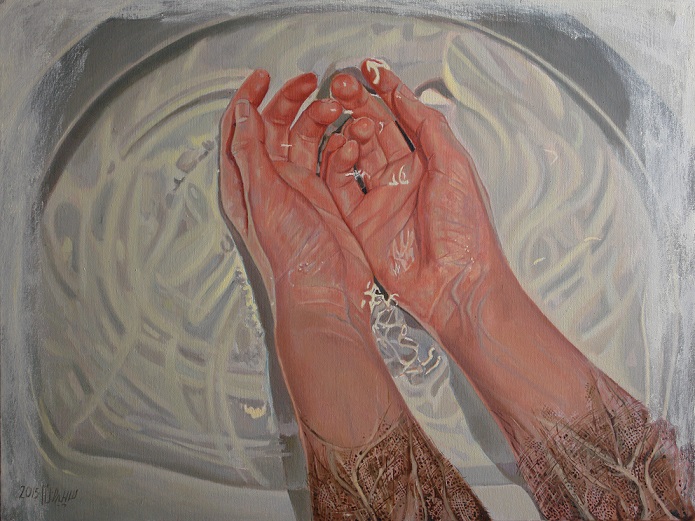
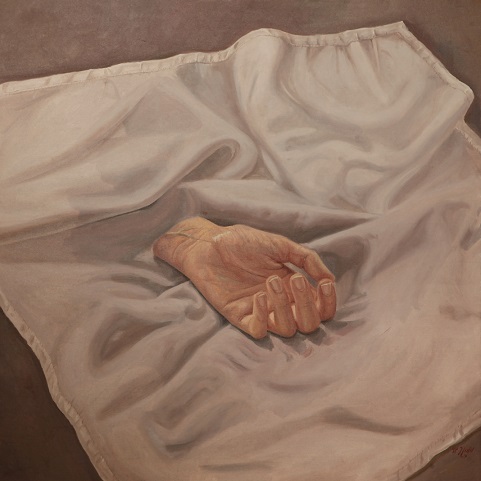
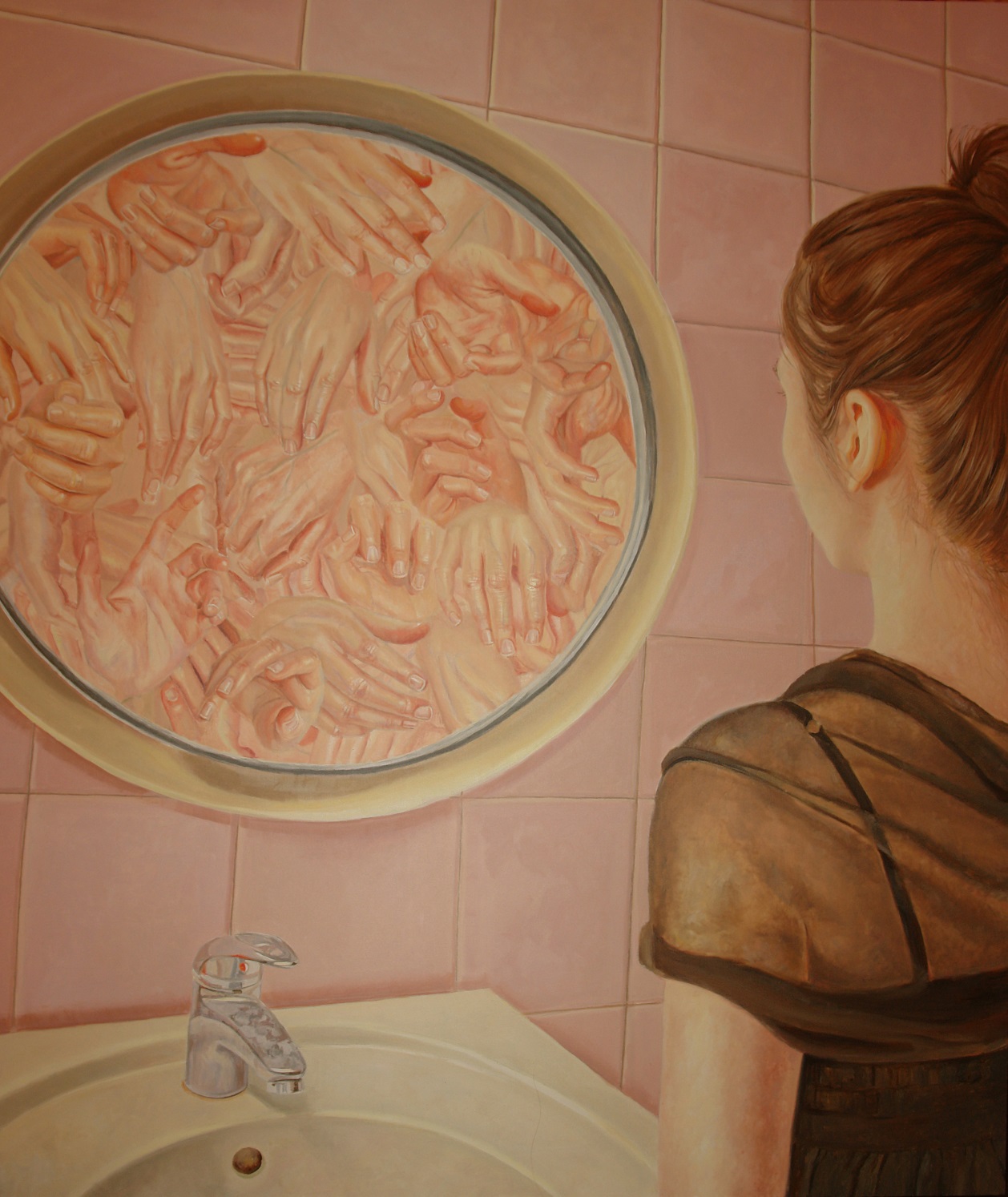
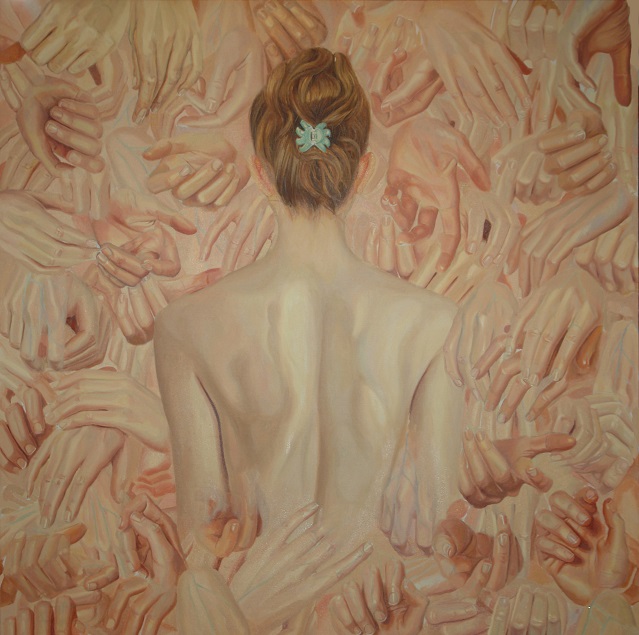
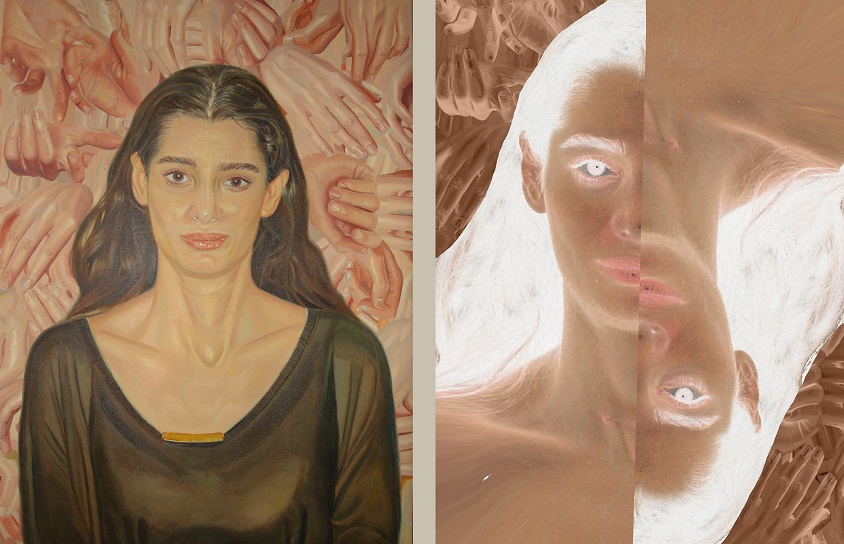
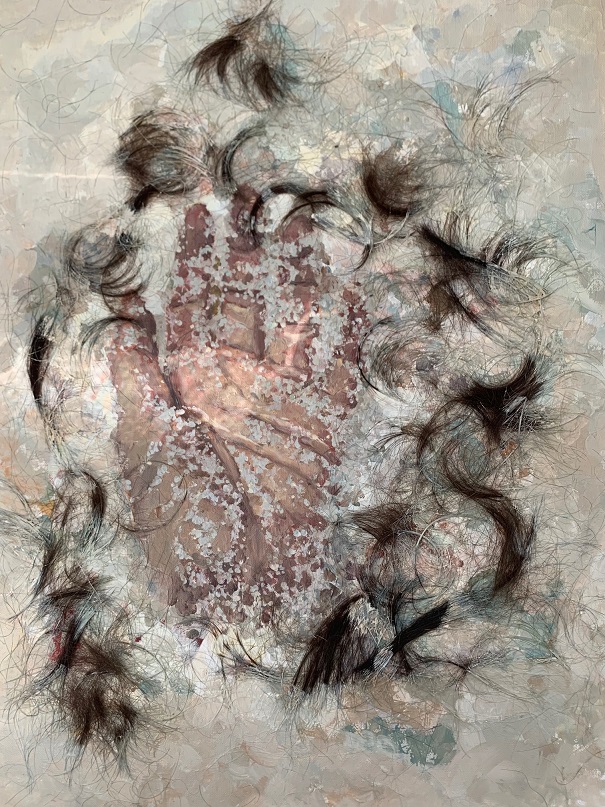
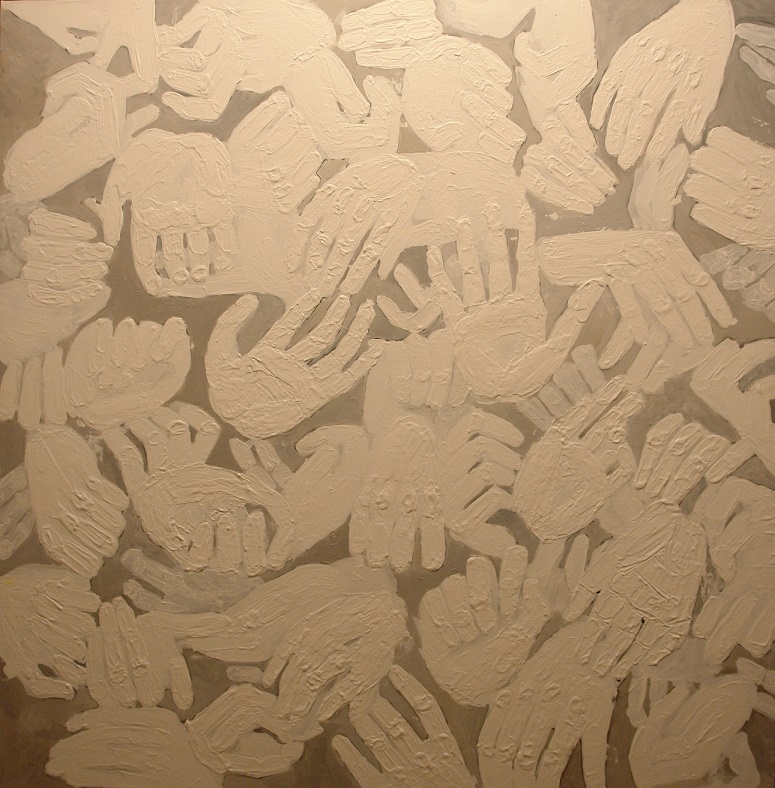
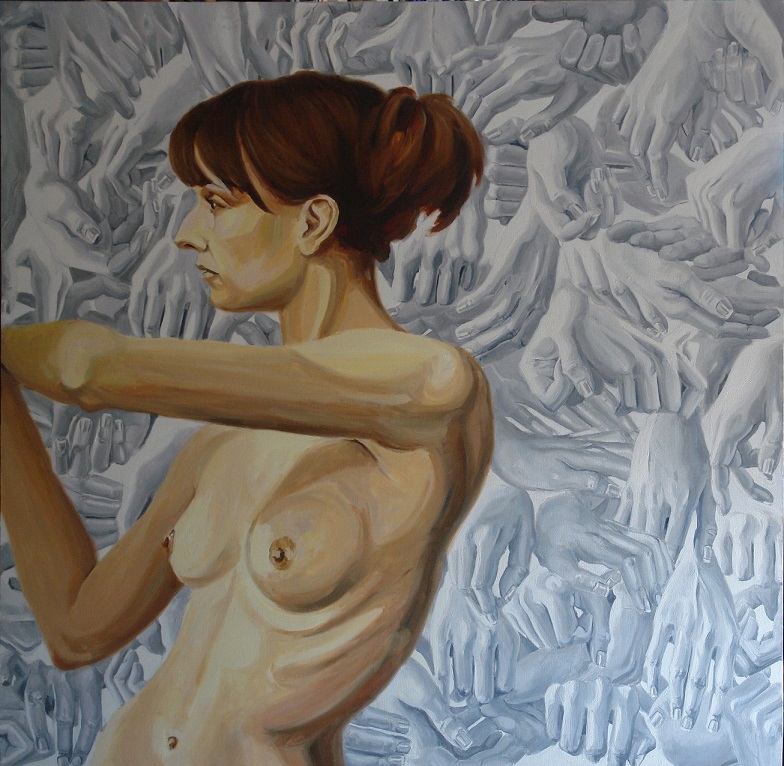
This painting marks the beginning of the Hand-Writing / Write-Handing series, in which the hand becomes both subject and language. It was my first attempt to create a visual vocabulary from fragments of the body—a language built not through narrative, but through traces, memories, and absences.
A solitary female figure occupies the foreground. Her body is turned away from the viewer, her gaze directed beyond the frame. Around her, countless hands fill the background. They do not touch her, yet they completely surround her. Detached from any visible body, these anonymous hands exist somewhere between memory and disappearance.
The image refers to one of humanity’s earliest forms of inscription: the handprints left on cave walls, those first signs of presence. But here, the gesture has changed. The individual mark has become a multitude. The hands overlap until there is no empty space left; they become like words compressed together until language dissolves into silence.
The hand is the first instrument of creation. It writes, draws, builds, touches, and expresses care. It can also become an instrument of violence and destruction. Separated from the body, however, the hand becomes something else: a fragment carrying the memory of actions long after the body has vanished. These hands are not representations; they are remains, traces of what has survived.
The grey field behind the figure suggests another sense of time. Its almost archaeological quality evokes collective memory, mourning, and historical residue. Against this background, the warmth of the woman’s body represents the vulnerability of living presence. She exists in the present while surrounded by the accumulated weight of the past.
The nude figure is not idealised or eroticised. Her exposure speaks of fragility and endurance. One critic described her as resembling a feminised Christ—not because of religious symbolism, but because of her quiet acceptance of suffering. She neither resists nor surrenders; she simply carries an invisible historical weight.
Throughout the Hand-Writing / Write-Handing series, the hand functions as both body and text. A hand can become a face; a hand can become a word. These fragments never form a complete whole. They have no clear centre, beginning, or end. They remain in a state of becoming, pointing toward what is absent: the missing body, the untold story, and the silence surrounding trauma.
This painting also carries its own history of absence. Completed in 2012, it could never be exhibited in Iran. It was first shown abroad in the travelling exhibition Unexposed, presented in Athens, Warsaw, and Brussels, an exhibition dedicated to works that could not be publicly displayed in Iran. During that exhibition, the painting was sold, and it entered a life beyond my own. It remains the only work of mine that I sometimes find myself wondering about: where it exists now, and what kind of presence it has become in another space.
Like the hands surrounding the figure, the painting continues to exist between presence and absence—speaking from a place where what cannot always be shown still insists on being seen.
Title: n/a
Series: Hand Writing / Write Handing
Medium: Oil on Canvas
Dimensions: 100x100x4 cm
Year: 2012
Hand-Writing/Write-Handing
The hand remains as a trace through time, like its imprint in the depths of caves—condemned to dark and uninhabited cavities, walls inscribed by bodiless hands.
The hand as tool, the hand as word.
The hand that draws, the hand that kills.
The hand is a face. The hand is, in itself, a body. A faceless body, a bodiless hand.
Hands tangled together. A multitude of fragmented hands. They are the absence of presence, and the presence of absence.
The substance of this multiplicity: they have passed through death and remained. The remnants of a terrifying experience. The outcome of bodies’ disintegration. Hands without bodies, bodies without limbs. Hands that lead the viewer beyond the text, toward the absence of the body, toward the emptiness beside the frame.
Hands gathered together, yet each remaining distinct. They carry time and bear traces of place. Mourning time and place. Compressed hand-words. Without beginning and without end. Fragments that never reach unity. Without a center. They are not; they become.
Multiple hands. Without a blank space through which they can be read. Hands intertwined with one another, narrowing the possibility of seeing, and of reading. A sealed secret. A dark cavity, as if. At once concealed and revealed.